









U.S. Commends Nepal Police for Flood Victim Identification, Reaffirms Support for Disaster Recovery

Editorial | The Ton News
By Hark Bahadur Tamrakar aka HB Tamrakar
Editor-in-Chief, thetonnews.com

The United States has commended Nepal Police for their efforts to locate and identify missing American citizens and other victims of the devastating floods, highlighting the importance of international cooperation during humanitarian emergencies.
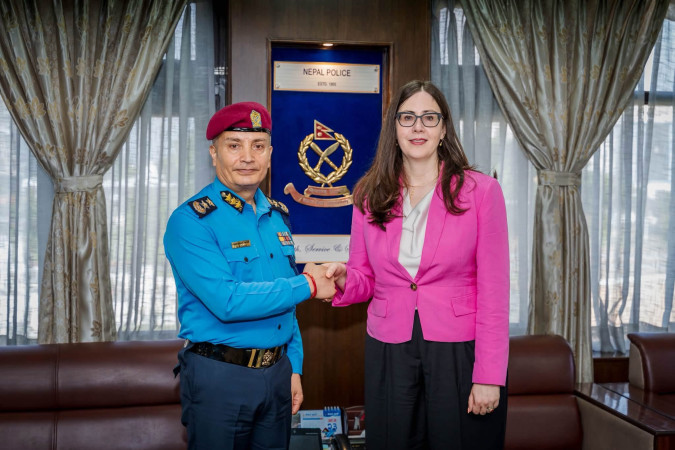
U.S. Chargé d’Affaires, a.i. Megan Bouldin met with Nepal Police Inspector General Dan Bahadur Karki to express appreciation for the police force’s work in locating missing persons and identifying flood victims. During the meeting, Bouldin reaffirmed the United States’ commitment to supporting both American citizens and Nepali communities affected by the disaster.
According to the U.S. Embassy’s statement, American assistance includes donations of disaster response equipment, support for Disaster Victim Identification (DVI), and Rapid DNA supplies to help strengthen identification efforts.
Nepal Police at the Frontline of Humanitarian Response
Locating missing persons and identifying victims after a major disaster are among the most sensitive and challenging responsibilities of law enforcement agencies. These efforts require professional investigation, forensic expertise, accurate documentation, and coordination among relevant authorities.
For families waiting for information about missing loved ones, victim identification is not simply a technical procedure. It is an essential part of obtaining answers, finding closure, and ensuring that victims are treated with dignity.
The recognition extended by the United States underscores the importance of Nepal Police’s role in disaster response and the value of international assistance in strengthening forensic and emergency-response capabilities.
Technology and International Cooperation
Disaster Victim Identification involves systematic methods to establish the identities of people who have died during disasters. Rapid DNA technology can support identification processes when used appropriately alongside established forensic procedures and other reliable evidence.
The provision of specialized equipment and Rapid DNA supplies can help improve the capacity of response teams. However, the effectiveness of these resources depends on trained personnel, proper procedures, quality assurance, and the responsible handling of sensitive personal information.
The U.S. commitment also reflects a broader humanitarian partnership that extends beyond immediate emergency relief to technical cooperation and support for affected communities.
The Editorial View
The tragedy of a natural disaster extends far beyond physical destruction. Families face uncertainty, communities struggle to recover, and public institutions are challenged to respond quickly while maintaining accuracy, transparency, and compassion.
Cooperation between Nepal and the United States in locating missing persons and identifying victims demonstrates how international partnerships can support humanitarian responsibilities. Such cooperation can also create opportunities to strengthen Nepal’s forensic capabilities, disaster preparedness, and emergency-response systems.
Nepal should continue investing in modern equipment, specialized training, inter-agency coordination, and victim-centered procedures. International support is most effective when it contributes to sustainable national capacity and benefits communities long after the immediate crisis has passed.
The dignity of every victim and the anguish of every affected family must remain at the heart of disaster response. By combining professional policing, modern forensic technology, and international solidarity, Nepal can strengthen its ability to respond to future emergencies and provide answers to families in their most difficult moments.