









Editorial: Nepal–U.S. Partnership in Disaster Response and Humanitarian Dignity
The Ton News | Editorial
By Hark Bahadur Tamrakar (HB Tamrakar)
Disasters leave behind more than physical destruction. They displace families, take precious lives, and leave loved ones waiting in uncertainty for news of those who remain missing. In such difficult circumstances, identifying victims, providing reliable information to grieving families, and protecting human dignity must be among the highest priorities of both national authorities and the international community.


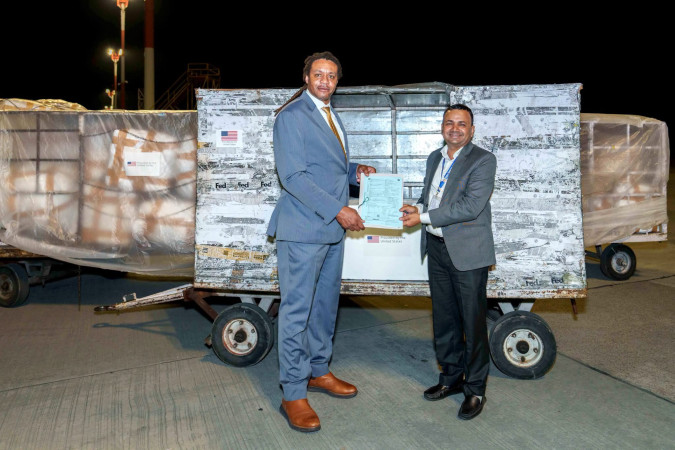
The United States’ support for Nepal’s disaster response, particularly in forensic identification, represents an important contribution to this humanitarian responsibility. The recent transfer of DNA-testing supplies to Nepal Police, represented by U.S. Embassy Regional Security Officer Wil Vaughn, marks another step in strengthening Nepal’s capacity to identify victims and provide answers to families affected by the tragedy.
The supplies are part of a $1 million U.S. contribution to support Nepal’s Rapid DNA systems. Manufactured by U.S.-based Thermo Fisher Scientific in Middletown, Virginia, these materials are expected to help Nepal’s forensic teams expand DNA testing and improve the process of identifying victims, including American citizens and others affected by the disaster.

Victim identification is not merely a technical procedure; it is a matter of human dignity and the right of families to know the truth. For families waiting anxiously for information about missing loved ones, uncertainty can become an unbearable burden. Scientific identification, conducted accurately and transparently, can help bring clarity, support the grieving process, and ensure that every victim is treated with respect.
This cooperation also highlights the importance of strengthening Nepal’s long-term forensic capabilities. Providing advanced testing supplies is a valuable step, but sustainable progress requires trained personnel, well-equipped laboratories, quality assurance, secure handling of sensitive data, and transparent procedures. Nepal should use international assistance not only to address immediate emergencies but also to build a stronger national system for responding to future disasters.

According to the U.S. side, the United States has committed more than $36 million in assistance to Nepal’s flood response and recovery efforts. This support covers multiple areas, including forensic identification, emergency relief, logistics, health services, and recovery.
Such cooperation demonstrates how international partnerships can translate into practical support when communities face devastating circumstances. It also reflects the importance of Nepal–U.S. relations beyond diplomatic meetings and official statements, extending into areas that directly affect public safety, humanitarian protection, and the well-being of ordinary people.
However, the real measure of any assistance lies in its impact on the ground. Relief must reach affected communities promptly, victim identification must proceed with accuracy, and recovery programs must address the long-term needs of displaced and vulnerable families. The effective use of assistance, public accountability, and coordination among relevant agencies are essential to achieving these goals.
Nepal must continue strengthening its disaster preparedness, emergency response systems, and institutional capacity while working closely with trusted international partners. International assistance can provide critical resources, but national preparedness, professional implementation, and accountability remain equally important.
Ultimately, the success of disaster response should not be measured by financial commitments alone. It should be measured by the lives protected, the victims identified, the families given answers, and the communities helped to rebuild their futures.
At a time when families are waiting for news of their loved ones, every scientific breakthrough, every coordinated effort, and every act of international solidarity carries profound human significance. The Nepal–U.S. partnership in disaster response offers an opportunity to turn cooperation into meaningful action—and to ensure that compassion, dignity, and humanity remain at the center of recovery.